Get Paid To Read For Audible: How I Built a Flexible Income Reading Audiobooks From Home

At no additional cost to you, as an affiliate of Amazon and other organizations, I may earn money or products from the companies mentioned in this post. When you use my links, you also support this single mom. Thanks! Read the privacy policy and disclosure here.
I’ll be straight with you. When I first heard you could Get Paid To Read For Audible, I thought it sounded too good to be true. Reading books out loud and getting paid? From home? On my own schedule? Yeah, right.
But here’s the thing. After three years as an audiobook narrator, I’ve learned this opportunity is real. It’s not a get-rich-quick scheme, and it’s definitely not passive income. But if you’re a mom like me who needs flexibility and wants to build something meaningful while the kids are at school, this work can change your life.
I’m going to walk you through exactly how to get started. No fluff. No unrealistic promises. Just the real information you need to decide if becoming an audiobook narrator is right for you.
What Does It Actually Mean to Get Paid To Read For Audible?
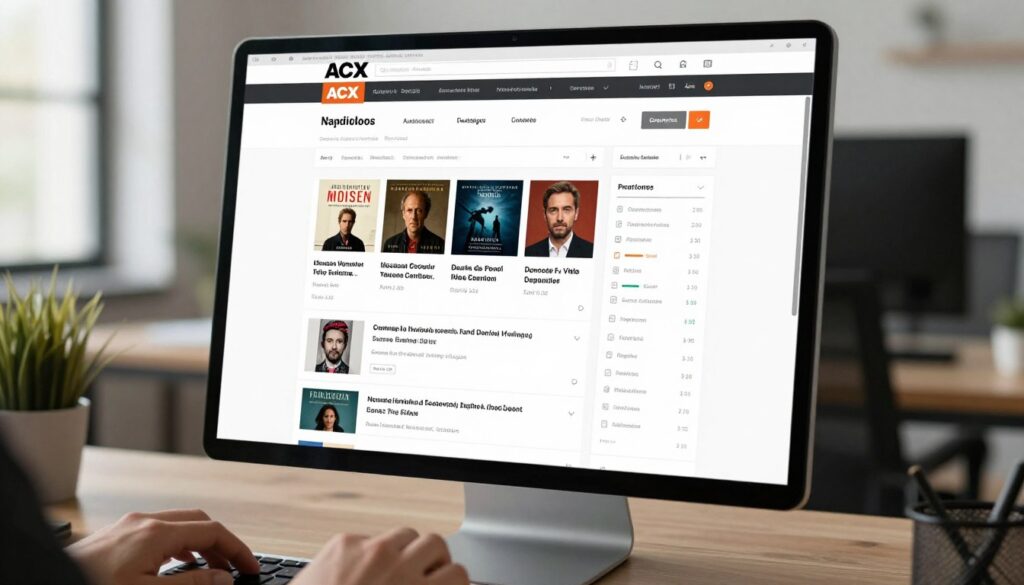
Let me clear up some confusion right away. When people search for how to get paid to read for Audible, they’re usually talking about becoming an audiobook narrator through ACX, which is Amazon’s Audiobook Creation Exchange platform.
ACX connects narrators with authors and publishers who need their books turned into audiobooks. You audition for projects, get hired, record the audio at home, and upload the finished files. Once the book goes live on Audible, Amazon, and iTunes, you earn money based on the payment structure you agreed to.
There are three main ways audiobook narrators get paid through this work:
Per Finished Hour (PFH)
This is the payment method I recommend for beginners. You negotiate a flat rate for each finished hour of audio you produce.
- Payment ranges from $50 to $400+ per finished hour
- You get paid regardless of book sales
- Money hits your account faster
- No royalty sharing with the author
Royalty Share
You split the ongoing sales royalties with the rights holder, typically 50/50, but receive no upfront payment for the recording work.
- No money upfront while you record
- Passive income potential if the book sells well
- Higher risk, especially for unknown authors
- Can take months to see any income
Royalty Share Plus
A hybrid approach where you receive a smaller per-finished-hour rate plus a percentage of ongoing royalties from book sales.
- Combines upfront payment with passive income
- Lower PFH rate than straight PFH deals
- Best of both payment worlds
- Requires negotiation skills
When you’re just starting out, I strongly recommend focusing on PFH projects. You need cash flow, not promises of future royalties on books that might never sell.
Ready to See If You’re Cut Out for This Work?
I created a free Paid To Narrate Class based on what I wish someone had told me before I started. It covers the honest truth about skills, equipment, and getting paid. No payment required—just commit 60 minutes to learn and get real with yourself about whether this opportunity fits your life right now.
How Much Money Can You Actually Make as an Audiobook Narrator?
This is where I need to give you the unfiltered truth. The income range for audiobook narrators is massive, and where you fall on that spectrum depends on your experience, voice quality, genre specialization, and how much time you can dedicate to this work.

Here’s what I’ve seen in the real world and what I’ve experienced myself:
Beginner Narrators (First 6-12 Months)
When you’re starting out, expect to earn between $50 and $150 per finished hour on ACX. If that sounds low, remember, you have zero reviews, no portfolio, and you’re still learning the technical side of recording and editing audio.
And those that join my Audiobook Blueprint course, actually learn how to earn more with bonuses.
For my first several books, I took royalty share projects just to build my profile. I earned exactly zero dollars while putting in about 60 hours of work. Not my favorite moments, but hey, I’m still earning royalties from those books years later.
Most beginners can produce one finished hour of audio for every four to six hours of work. That includes recording time, editing, fixing mistakes, and uploading files. So if you land a $50 PFH gig and it takes you five hours to produce one finished hour, you’re making $10 per hour of actual work.
Not glamorous. But it’s a starting point.
Intermediate Narrators (1-3 Years Experience)
Once you’ve got 10 to 20 books under your belt and some positive reviews, your earning potential jumps significantly. Intermediate narrators typically charge $150 to $250 per finished hour.
Your efficiency improves too. After a year of steady work, I could produce one finished hour in about two to three hours of total time. That puts your effective hourly rate at $75 to $125 per hour, depending on your PFH rate and speed.
At this level, if you can dedicate 20 hours per week to audiobook work, you could realistically earn $2,000 to $5,000 per month. That’s assuming you maintain a steady flow of projects, which requires constant auditioning and relationship building with authors and publishers.
Professional Narrators (3+ Years, Specialized)
Experienced audiobook narrators who’ve developed a niche and built a strong reputation can command $250 to $400+ per finished hour. Some well-known narrators in specific genres charge even more.
These narrators can produce one finished hour in 90 minutes to two hours of work. They’ve mastered their recording space, their vocal delivery, and their editing workflow. They also spend less time auditioning because publishers and authors seek them out directly.
A full-time professional narrator working 40 hours per week can produce roughly 15 to 25 finished hours of audio per month and earn $3,750 to $10,000+ monthly.
Real Talk: I’m currently in the intermediate category. After my first project, I really started getting the hang of things and my workflow got faster and smoother.
Factors That Impact Your Audiobook Income
Income Boosters
- Genre specialization (romance, business, children’s books)
- Excellent audio quality and editing skills
- Fast turnaround time
- Strong reviews and ratings
- Ability to do character voices and accents
- Professional home studio setup
- Consistent availability for projects
Income Killers
- Poor audio quality (background noise, echo)
- Slow production speed
- Unreliable schedule or missed deadlines
- Limited vocal range
- Bad reviews or rejected files
- Competing on price instead of quality
- Inconsistent auditioning
The amount of money you make as an audiobook narrator depends heavily on how much time you invest and how seriously you treat this like a real business. This isn’t a side hustle you can dabble in once a week and expect to make $3,000 a month. It requires consistent work, continuous skill improvement, and smart business decisions.
What You Actually Need to Get Paid To Read For Audible
Let’s talk about what it takes to become an audiobook narrator for Audible and other companies. I’m going to break this down into three categories: technical requirements, skill requirements, and the stuff nobody talks about but absolutely matters.

Technical Requirements for Recording Audiobooks
You don’t need to spend thousands of dollars on equipment when you’re starting out. I recorded my first few audiobooks in my dining room using a second-hand microphone I got from a friend. Here’s what you actually need:
Quality Microphone (Essential)
This is the one area where you cannot cheap out. Your audio quality determines whether you get hired, period. ACX has strict technical requirements, and your recordings need to meet specific noise floor, RMS, and peak level standards.
For beginners, I recommend starting with a USB condenser microphone in the $100 to $200 range. I upgraded to a Shure MV7+ and it’s not cheap. So if you’re on a budget, I suggest a Blue Yeti which is also a solid choices that thousands of audiobook narrators use successfully.
For a full list of suggested narration recording equipment, including bundles, check out my My Amazon Idea List.
Recording and Editing Software
You need software to record your voice and edit the audio files. The good news? You can start completely free.
Audacity is free, open-source recording software that works perfectly fine for audiobook production. I used it for my first year. The interface isn’t pretty, but it gets the job done.
Many narrators eventually upgrade to paid options like Adobe Audition, Reaper, or Twisted Wave for more advanced editing features. But when you’re starting out and trying to minimize costs, Audacity works.
Quiet Recording Space
This is where people get tripped up. You need a space with minimal background noise and echo. Not a professional studio. Just a quiet space.
I record in a carpeted home office. Other helpful ideas include area rugs, thick curtains, or moving blankets hung on a PVC frame. Total cost for soundproofing: under $100, or free depending on what you have on-hand. It’s not Instagram-worthy, but the audio quality meets ACX standards.
Your recording space needs to be free from:
- Traffic noise from outside
- HVAC system noise (you’ll need to turn it off while recording)
- Computer fan noise
- Echo from hard surfaces
- Neighbors, dogs, kids, or anyone else making noise
This is why many narrators, including myself, work early morning or late evening hours when the world is quieter. It’s also why having a flexible schedule matters so much for this work.
Headphones
You need closed-back headphones to monitor your recording without audio bleed. I use a pair of Philips Cushioned Wired headphones. They’re comfy, and they work.
Pop Filter
A pop filter reduces plosive sounds (hard P’s and B’s) that can ruin your audio. You can get one for $10-$20. Just buy it. Your future self will thank you.
Skills You Need to Succeed
Equipment is just the beginning. The real work is developing the skills that separate professional narrators from people who just read out loud.
Reading Out Loud (Not as Easy as You Think)
Reading silently to yourself and reading out loud for hours at a time are completely different skills. Your mouth gets tired. Your voice gets strained. You stumble over words you’ve said a thousand times.
For practice, record yourself reading out loud for 20 minutes. Listen back. If you can handle hearing your own voice and you don’t sound like a robot, you’re on the right track.
Basic Audio Editing
You don’t need to be a sound engineer, but you do need to learn basic editing: removing mouth clicks, cutting out mistakes, adjusting volume levels, and mastering your finished files to ACX specifications.
Plan to spend at least 20 to 30 hours learning your editing software before you take on your first paid project. I made the mistake of learning while on deadline, and it was brutal.
I help people avoid this problem by teaching editing to meet Audible’s strict sound requirements in the Audiobook Blueprint course.
Consistency and Endurance
Recording an audiobook isn’t a quick task. The average audiobook is 8 to 10 finished hours of audio. That means 32 to 60 hours of total work for a single book, spread over days or weeks.
You need the discipline to show up every day and make consistent progress. You also need vocal endurance to record for two to four hours at a time without your voice giving out.
Character Voices (For Fiction)
If you want to narrate fiction, you need the ability to create distinct character voices so listeners can tell who’s speaking. You don’t need to be a professional voice actor, but you do need range.
Nonfiction is more forgiving in this area. Business books, memoirs, and self-help books typically just require a clear, engaging reading voice.
I Started With the Exact Setup I Just Described
My complete equipment list, including the specific microphone, software, and soundproofing materials I used to record my first 2 audiobooks, all for under $300. This guide includes Amazon links to every item, room setup photos, and my honest review of what worked and what didn’t. Stop second-guessing your equipment choices.
Step-by-Step: How to Get Started as an Audiobook Narrator
Alright. You’ve got basic equipment. You’re ready to actually start getting paid to read for Audible. Here’s exactly what you need to do.

Step 1: Create Your ACX Account
Go to ACX.com and sign up for a free account. You’ll need an Amazon account to get started, which you probably already have.
Choose “Narrator/Producer” as your account type. Fill out the basic profile information. This takes about 10 minutes and costs you nothing.
Step 2: Record Your Sample Files
This is the most important step, and it’s where most people get stuck. ACX asks you to upload sample recordings before you can audition for projects. You don’t have to.
I got my contracts with no sample ever uploaded. But, if I were you, I would upload the sample. Why?
Uploading an audio sample allows authors to find you. You can be found any time of the day or night because your sample is readily available, which gives you a higher chance of landing jobs. If you don’t have a sample on your account, you can only get jobs if you actively search and audition.
For the sample, you need to record yourself reading from books in genres you hope to land jobs for. This showcases your voice and range. I recommend creating samples in at least three genres you’re interested in narrating: fiction, nonfiction, and maybe children’s books or romance.
Each sample should be 1 to 3 minutes long and demonstrate:
- Clear, professional audio quality with no background noise
- Good pacing and vocal variety
- Character voices if you’re doing fiction
- Your natural reading voice for nonfiction
Record multiple takes. Edit out mistakes. Master the audio to ACX standards (you can find the exact specifications on the ACX website). This will take you several hours to get right, especially your first time.
To do this faster and easier, join the Audiobook Blueprint course where I’ll show you how to do the editing.
Pro Tip: You can use copyrighted material for your samples. But, ACX advises, if a rights holder requests the sample be removed, they will take it down. I’ve never heard of that actually happening. But alternatively, you can write your own sample scripts. And with the power of AI, this can be done in seconds.
Step 3: Complete Your ACX Profile
Upload your sample files and fill out the rest of your profile. Include:
- A professional headshot (doesn’t need to be fancy, just clear and friendly)
- A bio that highlights any relevant experience (even if it’s just “clear speaking voice” or “experience reading to children”)
- Your studio setup details
- Genres you’re interested in narrating
- Your availability and turnaround time
You don’t have to do all these, but the more thorough the bio, the more professional you look.
Be honest in your profile. Don’t claim you can do 15 character voices if you can’t. Don’t say you can deliver a finished book in one week if you’re working this around a full-time job and kids.
Step 4: Start Auditioning for Projects
Once your profile is live, you can browse available audiobook projects and submit auditions. This is where the real work begins.
Filter projects by genre, payment type, and book length. When you’re starting out, look for:
- Shorter books (under 5 finished hours) so you can complete them quickly
- PFH payment offers, even if the rate is low
- First-time authors who might be more willing to work with new narrators
- Genres you genuinely enjoy and understand
For each audition, you’ll record yourself reading a specific section the author provides, usually 1 to 3 minutes long. Make it your best work. Edit it carefully. Submit it and move on to the next audition.
Plan to submit at least 10 to 20 auditions before you land your first project. I landed my first audition, which led to 6 contracts. But that’s not common. We have different backgrounds. I was a theater major and worked in radio. So, don’t base your journey on my experience.
Step 5: Nail Your First Project
When you finally land your first audiobook project, treat it like the opportunity it is. This is where you build your reputation.
Communicate clearly with the author or publisher. Read the book. Ask questions upfront about pronunciation, character voices, pacing preferences, and deadlines. ACX will send the contract. Get everything in writing before you start recording.
You’ll need to record and submit a 15-minute checkpoint before recording the rest of the book. This lets the author hear the book and provide any feedback before the heavy lifting is done.
The 15-minute checkpoint does not have to be exactly 15 minutes. Each of mine was the first chapter which happened to be approximately 15 minutes long.
Record in small chunks. Don’t try to power through an entire 8-hour book in one weekend. That’s how you burn out your voice and make mistakes.
My recording schedule for the first book was 1-2 hours of recording per day, including editing. It took me nearly eight weeks to complete a 6-hour book. Slow and steady wins this race.
Upload your files according to ACX specifications. Double-check everything before you hit submit. Once the author approves your work and the audiobook goes live on Audible, you’ll get your first payment in about 30 to 45 days, depending on your type of contract.
Stop Overthinking It and Just Get Started
You may have been learning about this for weeks, maybe months. I jumped in immediately. That was the difference between me landing a contract on my first try and over a million people that watched the same YouTube video about this, and did nothing.
The only way to actually Get Paid To Read For Audible is to create your ACX profile and start auditioning. It’s free. It takes under 30 minutes. There’s literally no risk. Stop waiting for the perfect time and just do it today.
Mistakes New Audiobook Narrators Make (And How to Avoid Them)
I’ve made every mistake on this list. Some of them multiple times. Learn from my expensive, time-consuming failures so you don’t have to repeat them.

Underpricing Your Work
I get it. When you’re desperate to build your portfolio and nobody will hire you, those low-paying $50 PFH projects look tempting.
Don’t do it.
Flat rate projects should be paying you at least $150 PFH or get a Royalty Share Plus. That way, you can still leverage royalties for 7 years.
Even as a beginner, your time has value. If it takes you 5 hours to produce one finished hour of audio, and you’re charging $50 PFH, you’re making $10 per hour. That’s not sustainable, and it trains authors to expect dirt-cheap narration.
If you promote the book like you should, you can really earn well with any type of contract.
But if you don’t know how to promote and earn bonuses for additional payment, you need to get in Audiobook Blueprint course.
Whatever you do, don’t get stuck in the $50 royalty share trap. Position yourself as a professional who’s building a business, not a hobbyist looking for pocket change.
Ignoring Audio Quality Standards
ACX has specific technical requirements for audiobooks. Your files will get rejected if they don’t meet noise floor, RMS level, and peak level specifications.
I uploaded my first complete audiobook without understanding mastering. Several files got rejected. I spent several more days remastering everything to meet ACX standards. Learn the specs before you record your first project.
I teach it in detail in Audiobook Blueprint course.
Accepting Projects in Genres You Hate
Recording an audiobook takes 40 to 60 hours of focused work. If you hate the genre or find the content boring, those hours will be absolute torture.
Only audition for books you would genuinely enjoy reading. Your enthusiasm (or lack of it) comes through in the audio.
Not Setting Boundaries With Authors
Some authors are dream clients. They trust you, give clear direction, and appreciate your work. Others will micromanage every breath, demand endless revisions, and add scope to the project after you’ve agreed on terms.
Before you start any project, clarify in writing:
- How many rounds of revisions are included
- Turnaround time expectations
- Character voice preferences
- Pronunciation guides for unusual names or terms
- Payment terms and schedule
If an author starts making unreasonable demands or expanding the scope without additional payment, you have every right to push back professionally. This is a business transaction, not a favor for a friend.
Watch Out For: Authors who want you to record a “short sample” of three chapters before they commit to hiring you. That’s spec work, and it’s not okay. A standard audition is 1 to 3 minutes. Anything more is taking advantage of your time.
The Real Time Commitment: What Recording Audiobooks Actually Looks Like
Nobody talks enough about the time investment required to make decent money as an audiobook narrator. So let me break down the actual hours for you, because this is where most people’s expectations crash into reality.

How Long Does It Take to Record an Audiobook?
Industry standard: it takes 2 to 6 hours of work to produce 1 finished hour of audio, depending on your experience level and the complexity of the book.
Let’s break that down for a typical 8-hour audiobook:
| Activity | Time Required | Notes |
| Reading and prep | 4-6 hours | Read through entire book, make pronunciation notes, understand characters |
| Recording | 12-20 hours | Actual time speaking into microphone, includes retakes and breaks |
| Editing | 8-16 hours | Removing mistakes, mouth noise, adjusting levels |
| Mastering and QA | 2-4 hours | Final processing, quality checks, exporting files |
| Uploading and admin | 1-2 hours | File uploads, communication with author, metadata |
| Total | 27-48 hours | For an 8-hour finished audiobook |
When you’re just starting out, you’ll be on the higher end of that time range. After the first project or two, you’ll get faster.
Finding Time as a Busy Mom
This is the part that matters most to moms like me. How do you actually fit audiobook narration into a life that already includes kids, household responsibilities, and possibly another job?
Here’s my honest answer: you carve out specific blocks of time and protect them fiercely.
My recording schedule looks like this:
- Monday through Friday: 9:00 AM to 11:30 AM (after kids leave for school, before household noise picks up)
- Edit in the afternoons during quiet time or after kids’ bedtime: 8:00 PM to 10:00 PM, three nights a week
- Total weekly hours: 15 to 18 hours of focused audiobook work
This schedule produces about 5 to 7 finished hours of audio per week. At $150 PFH (an average rate), that’s $750 to $1,050 per week, or roughly $3,000 to $4,200 per month.
Could I work more hours and make more money? Sure. But I built this business for flexibility and balance, not to work myself into the ground. The whole point was to be available for my kid and have time for my life.
Auditioning Takes Time Too
One thing people don’t realize: you can’t just work on paid projects. You need to constantly audition for new work to maintain a pipeline of projects.
Dedicate 2 to 3 hours per week browsing ACX projects and submitting auditions. That’s non-billable time that’s absolutely necessary to keep the work flowing.
In the beginning, you’ll spend even more time auditioning because your success rate is lower. Plan for more time auditioning in your first few months until you build up your profile and start getting repeat clients.
Beyond ACX: Other Ways to Get Paid Reading Books Aloud
ACX is the biggest and most accessible platform for audiobook narrators, but it’s not the only way to get paid to read. Here are some alternatives worth knowing about.

Findaway Voices
Findaway Voices is similar to ACX but distributes audiobooks to a wider range of platforms beyond just Audible and Amazon. The platform connects narrators with authors and offers both royalty share and PFH payment options.
The advantage: broader distribution means potentially more sales and royalty income. The downside: fewer projects available compared to ACX, and the platform takes a percentage of your earnings.
Direct Publisher Contracts
Once you’ve built a solid portfolio and reputation, you can reach out directly to publishers and offer your narration services. Publishing houses hire narrators for their audiobook divisions, and these contracts typically pay better than individual ACX projects.
This is a longer-term strategy. You need experience and professional samples before publishers will take you seriously. But it’s worth building toward because the pay is significantly better and the work is steadier.
Voices.com and Other Freelance Platforms
General voice-over platforms like Voices.com, Voice123, and Bunny Studio occasionally have audiobook narration jobs posted. These sites also offer other voice work like commercials, e-learning narration, and corporate videos.
The pay varies wildly. Some jobs are well-paid professional gigs. Others are lowball offers from clients trying to get cheap work. You’ll need to filter carefully and bid strategically.
I don’t rely on these platforms for audiobook work, but I have landed occasional projects there that paid well. They’re worth having a profile on as supplementary income sources.
Creating Your Own Audiobooks
If you’re entrepreneurial, you can record and self-publish your own audiobooks. This requires you to either write the content yourself or license public domain books to narrate.
The upside: you keep 100% of the royalties. The downside: you’re responsible for all marketing, distribution, and upfront costs. This is a much bigger time and money investment than narrating books for other people.
I’ve experimented with this approach and found it wasn’t worth my time compared to just taking PFH projects. But some narrators have built successful businesses this way, especially in specific niche genres.
Reading for the Blind and Print Disabled
Organizations like Learning Ally and the National Library Service for the Blind and Print Disabled need volunteer and paid readers to record books for people who can’t read traditional print.
This work is meaningful and valuable, though it typically pays less than commercial audiobook narration or operates on a volunteer basis. It’s a great way to build skills and give back while developing your narration abilities.
Is Getting Paid To Read For Audible Actually Right for You?
Let’s get real for a minute. Audiobook narration isn’t for everyone. It’s a legitimate way to earn flexible income from home, but it requires specific skills, significant time investment, and the patience to build a business from scratch.
Join my free narrator class and find out if this is really the right fit for you.
You’re a Good Fit for Audiobook Narration If:
- You enjoy reading and can sustain focus for long periods
- You have a clear speaking voice that’s pleasant to listen to
- You can dedicate at least 10 to 15 hours per week consistently
- You have a quiet space in your home where you can record
- You’re comfortable learning basic audio editing software
- You can handle repetitive work without getting bored
- You’re patient enough to build this income gradually over months, not weeks
- You need flexible work that fits around kids’ schedules
This Probably Isn’t for You If:
- You need immediate income and can’t wait months to build up to decent earnings
- You hate the sound of your own voice
- You don’t have a quiet space to record
- You get frustrated easily with technical learning curves
- You want completely passive income with no ongoing work
- You can’t commit to regular recording schedules
- You’re not willing to invest $200 to $500 upfront in equipment
My Take: If you’re a mom looking for a way to contribute financially without sacrificing time with your kids, audiobook narration can be incredible. But go in with realistic expectations. This isn’t a get-rich-quick opportunity. It’s a real business that requires real work. If you’re okay with that, the flexibility and income potential are absolutely worth it.
Your Next Steps: How to Actually Get Paid To Read For Audible
You’ve read this entire guide. You understand the work, the time commitment, the income potential, and the skills required. Now it’s time to make a decision and take action.
Join my free class to learn the fastest ways to land narration jobs.

Here’s what I want you to do right now, today, before you close this browser tab and go back to scrolling:
If You’re Ready to Start Immediately:
- Go to ACX.com and create your free narrator account (15 minutes)
- Download Audacity recording software (free)
- Record yourself reading out loud for 5 minutes and listen back to see if you can stand your own voice
- Research microphones in your budget and order one this week
- Find a quiet space in your home and start planning basic soundproofing
If You Need More Time to Prepare:
- Join my free beginner narrator class
- Practice reading out loud for 15 to 20 minutes every day this week
- Calculate your available hours per week and set realistic income goals
- Save up for equipment if you don’t have the budget right now
- Set a specific start date and commit to it
If You’re Still Unsure:
That’s completely okay. Not every opportunity is right for every person at every time in their life.
But here’s what I know: if you’ve read this far, you’re genuinely interested in this work. Don’t let fear of failure or perfectionism stop you from trying. The barrier to entry is low. The financial risk is minimal. The worst thing that happens is you try it for three months, decide it’s not for you, and move on with your life.
The best thing that happens? You build a flexible income stream that gives you freedom, uses your brain, and fits around your family. And open up even more opportunities like doing voiceovers for commercials and getting newbies to pay you to edit their audio. That’s worth exploring.
Ready to Take the First Step?
I’ve walked you through everything you need to know about getting paid to read for Audible. Now it’s your turn to decide whether this opportunity fits your life and goals. If you’re ready to start, the next logical step is creating your ACX account and recording your first samples. If you need more guidance, I’ve created additional resources to help you succeed.
Final Thoughts: The Truth About Getting Paid To Read For Audible
Six years ago, I was exactly where you might be right now. Curious about audiobook narration, wondering if someone like me with no special training or experience could actually make this work.
I’m here to tell you it’s absolutely real. I earned $1,000’s reading books out loud from my at home while my daughter were at school. That money paid for groceries, contributed to our family budget, and gave me a sense of purpose beyond just being mom and household manager.
But I also want you to understand this isn’t magic. It’s work. Real work that requires skill development, time investment, and patience to build.
The people who succeed at getting paid to read for Audible are the ones who treat it like a real business, not a hobby. They invest in quality equipment. They practice their craft. They show up consistently. They deliver professional work and build relationships with authors and publishers.
If you’re willing to put in that work, this opportunity can change your life. It changed mine.
The question isn’t whether you can do this. The question is whether you will.
Stop researching. Stop overthinking. Go create your ACX account and record your first sample. The only way to know if this works for you is to actually try it.
I’ll be here rooting for you.